
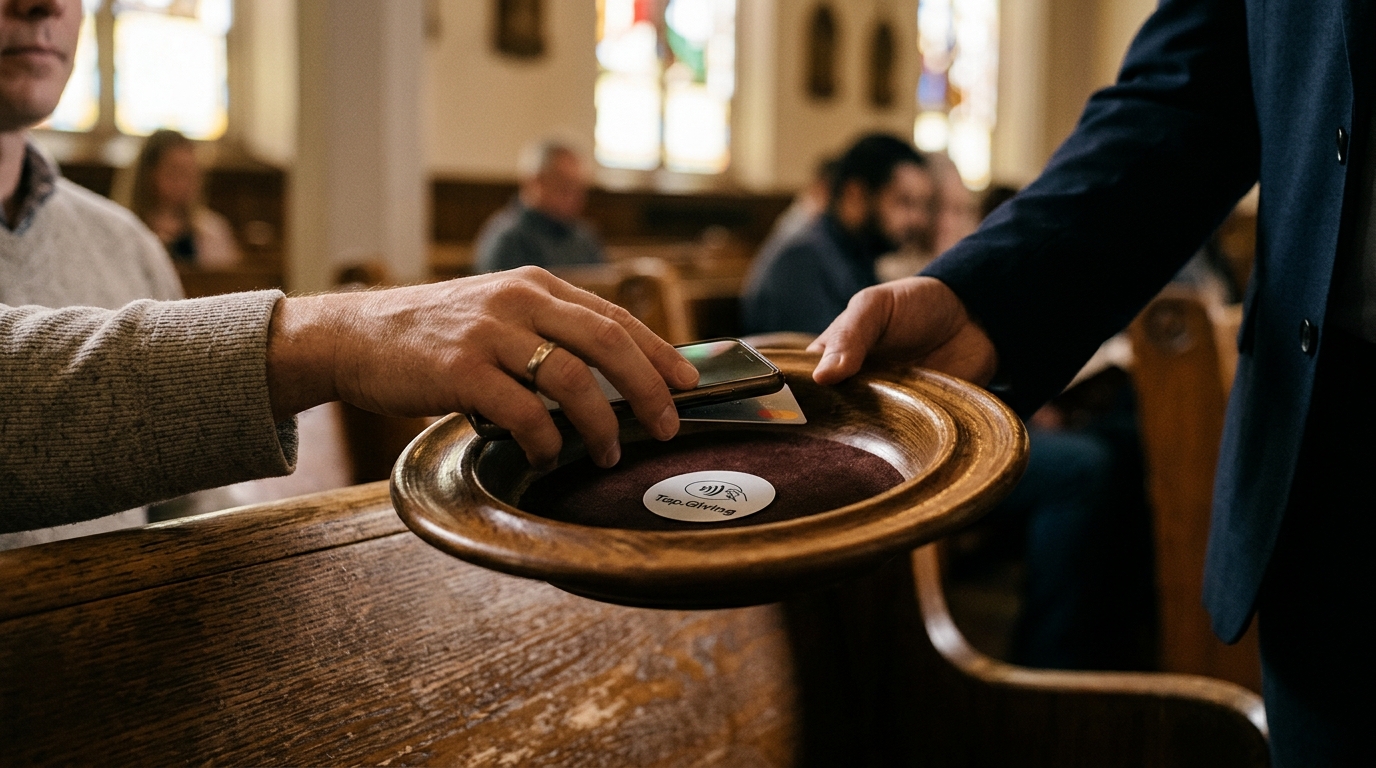
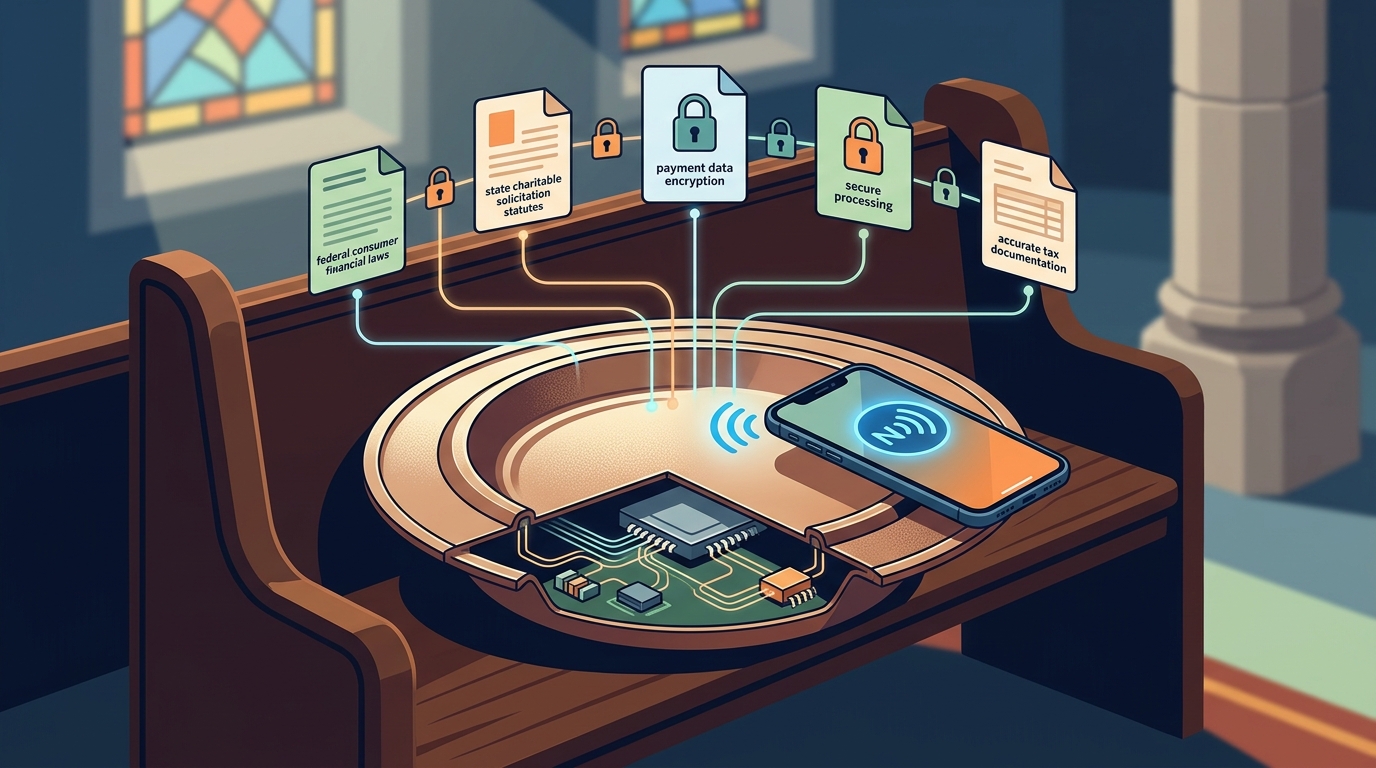
Donors using contactless giving at church are protected by federal consumer financial laws, state charitable solicitation statutes, and the specific terms of their giving platform. These rules ensure that your payment data is encrypted, your donation is processed securely, and you receive accurate tax documentation. Tap.Giving provides the physical hardware that connects your phone to these secure digital systems, ensuring that the legal protections of your chosen platform apply to every tap.
Consumer Financial Privacy and Data Security
When you tap a plate to give, your payment information is handled by a third-party payment processor, not the church itself. This triggers federal protections under the Gramm-Leach-Bliley Act (GLBA), which requires financial institutions to safeguard your nonpublic personal information. The processor must provide you with a privacy notice explaining how your data is collected and used. Additionally, the Payment Card Industry Data Security Standard (PCI DSS) mandates that any entity handling credit card data must maintain a secure environment. This means that even if a physical NFC plate is compromised, your actual card number is never stored on the device or the church's local network.
Charitable Solicitation and Transparency Laws
State laws govern how charities, including churches, solicit and handle donations. In many jurisdictions, organizations must register with the state attorney general or a similar regulatory body before soliciting funds. These laws often require charities to provide donors with a clear description of how their funds will be used. If a church is registered as a 501(c)(3) organization, it is also subject to IRS regulations regarding the issuance of tax receipts. You have the legal right to request a written acknowledgment of your donation for tax purposes, and the giving platform you use is typically responsible for generating these records accurately.
Consumer Rights in Electronic Transactions
Contactless giving is an electronic transaction, which means it is covered by the Electronic Fund Transfer Act (EFTA) and Regulation E. These federal laws give you the right to dispute unauthorized transactions and limit your liability for fraudulent charges. If you tap a plate and a charge appears that you did not authorize, you can contact your bank to initiate a dispute. The burden of proof generally shifts to the financial institution to investigate the claim. This protection is a critical safety net that does not exist with cash or check donations, where recovery of funds is significantly more difficult.
Platform Terms and Service Agreements
While federal and state laws provide a baseline of protection, the specific terms of your giving platform's service agreement also play a role. These agreements outline the platform's responsibilities for data security, transaction processing, and customer support. It is important to review these terms to understand how the platform handles your data and what recourse you have in the event of a service outage or error. Tap.Giving works with major platforms like Tithely, Pushpay, and Givelify, ensuring that the legal protections and service standards of these established providers are applied to your in-person giving experience.
Practical Steps for Donors
To maximize your legal protections, donors should take a few simple steps. First, ensure that you are using a reputable giving platform that is PCI DSS compliant. Second, keep your phone's operating system and apps up to date to maintain the security of your NFC chip. Third, monitor your bank statements regularly to identify any unauthorized charges promptly. By understanding these protections, you can give with confidence, knowing that your financial data is secure and your donation is legally recognized.
Key Takeaways
- Federal laws like the GLBA and PCI DSS protect your payment data during contactless transactions.
- State charitable solicitation laws require transparency in how donations are used.
- The Electronic Fund Transfer Act allows you to dispute unauthorized electronic charges.
- Churches must provide accurate tax receipts for 501(c)(3) donations.
- Reviewing your giving platform's terms of service is an important part of understanding your rights.
- Tap.Giving hardware connects to secure platforms, ensuring these legal protections apply to in-person giving.
Frequently Asked Questions
Does the church store my credit card number?
No. The NFC plate only opens a web page. Your payment information is entered directly into the giving platform's secure interface and is processed by a PCI DSS compliant payment processor. The church and the physical hardware do not store your card details.
What if I am charged twice by mistake?
You can contact your bank to dispute the duplicate charge under the Electronic Fund Transfer Act. The bank will investigate the transaction and typically reverse the unauthorized duplicate charge.
Are my personal details safe when I tap a plate?
Yes. The NFC signal only transmits a URL to open the giving page. Your personal information is only shared if you choose to enter it into the secure giving form, which is protected by encryption and federal privacy laws.
Do I need to sign a contract to use contactless giving?
No. You are not entering into a contract with the church or the hardware provider. You are simply using a digital tool to make a donation, which is governed by consumer financial laws and the platform's terms of service.
How do I get a tax receipt for my tap donation?
Your giving platform will automatically generate a tax receipt for your donation. You can usually access this receipt through your account on the platform's website or via email.
What is the role of Tap.Giving in these legal protections?
Tap.Giving provides the physical NFC hardware that directs your phone to your church's secure giving page. The legal protections come from the giving platform and payment processor, but Tap.Giving ensures that the connection is secure and reliable.
Conclusion
Donors using contactless giving at church are protected by a robust framework of federal and state laws that ensure data security, transaction integrity, and charitable transparency. By understanding these protections, you can give with confidence, knowing that your financial information is safe and your donation is legally recognized. Tap.Giving provides the secure hardware that connects you to these protected digital systems, making it easy to support your church while maintaining full legal and financial safeguards. To learn more about how Tap.Giving works with your platform, see how it works.