
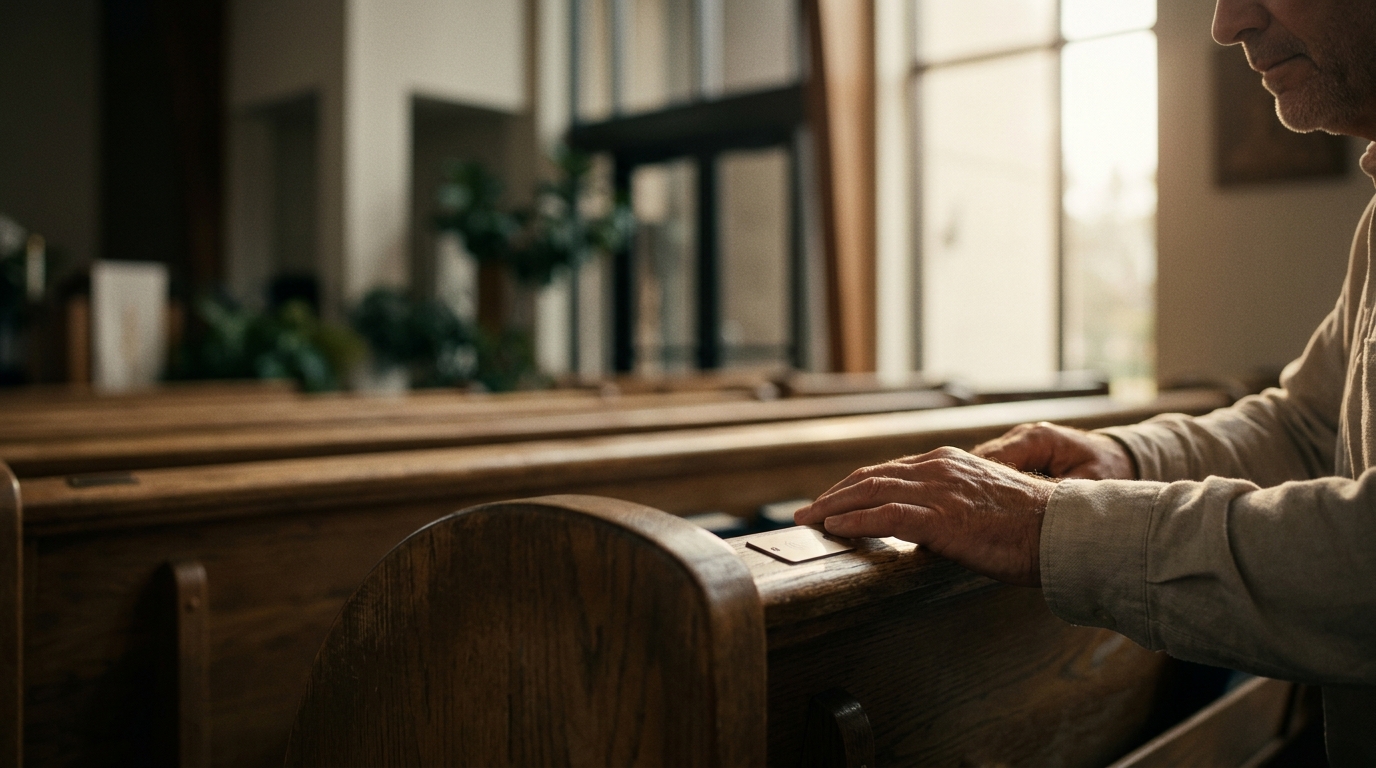
What's the actual total cost of installing NFC donation hardware in a church?
The Hardware Investment: Plates vs. Stickers
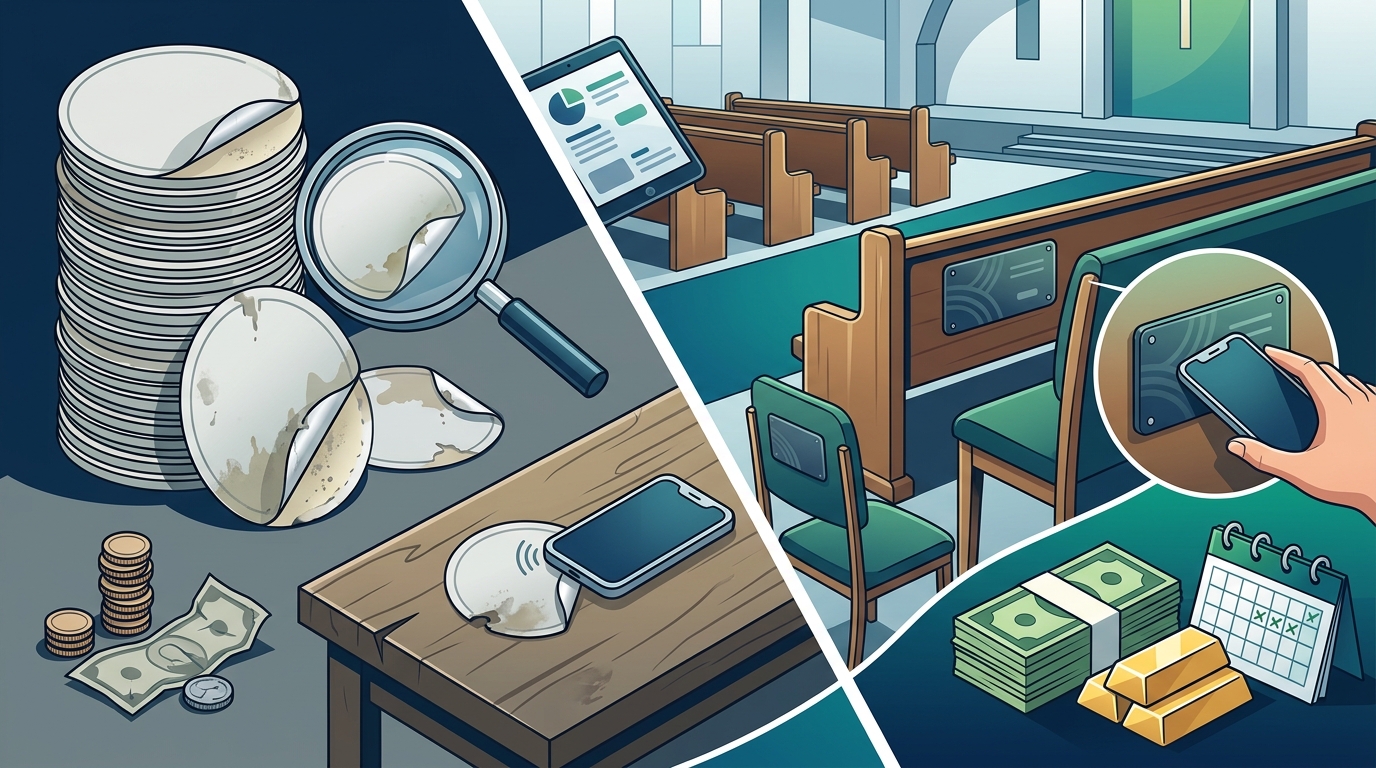
When calculating the upfront cost, the primary variable is the type of NFC hardware you choose. A standard NFC sticker costs significantly less than a rigid, custom-printed plate. However, durability and professional appearance are critical for a sanctuary environment. Rigid PVC plates are designed to withstand weekly use on pew backs and chair seats, whereas cheap stickers often peel or look unprofessional over time.
For a mid-sized church with 150 seats, the hardware cost is the dominant factor in the total budget. If you choose a premium, custom-branded plate, the per-unit cost is higher, but the longevity is better. You are buying a physical asset that lasts for years, not a service that requires a recurring payment. This distinction is vital for long-term financial planning.
Hidden Costs: Subscriptions and Platform Lock-in
Furthermore, platform lock-in can create future costs. If you switch giving platforms in the future, proprietary NFC tags may stop working, forcing you to buy new hardware. A platform-agnostic NFC plate simply opens a URL, meaning it works with any giving system you use today or in the future. This flexibility prevents unnecessary replacement costs down the line.
Installation and Labor: A DIY Approach
Installation labor is often a surprise cost for churches that hire professional IT firms. However, NFC installation is designed to be a DIY task. Most plates come with peel-and-stick adhesive backing or pre-drilled screw holes. A volunteer can install 100 plates in under an hour without any specialized tools or technical expertise. This means the labor cost is effectively zero.
You do not need to hire an electrician or a network engineer. There is no wiring, no power drop, and no network configuration required. The NFC chip is passive and draws power from the phone that taps it. This simplicity ensures that the total cost remains strictly limited to the hardware purchase, with no hidden service charges for setup or maintenance.
Long-Term Financial Impact and ROI
Over a five-year period, the total cost of ownership for a hardware-only solution is significantly lower than subscription models. You pay once, and the cost stops. This predictable budgeting is easier for a finance committee to approve than an open-ended subscription that may increase in price annually. The financial clarity of a one-time purchase makes it an attractive option for budget-conscious congregations.
Key Takeaways
- There are no monthly fees or transaction charges for hardware-only NFC solutions.
- Installation is a DIY task that requires no professional labor or technical expertise.
- Platform-agnostic hardware prevents future replacement costs if you switch giving software.
- The total cost of ownership over five years is significantly lower than subscription-based platforms.
- Custom branding adds a small premium but improves the professional appearance of the sanctuary.
Frequently Asked Questions
Do NFC plates require a monthly subscription?
No. Hardware-only NFC plates are a one-time purchase. They do not require a monthly fee, a software subscription, or a transaction charge from the hardware vendor.
How much does it cost to install NFC plates in a church?
Can I use NFC plates with my existing giving platform?
Yes. NFC plates are platform-agnostic. They simply open a URL in the user's browser, so they work with any giving platform, including Tithely, Pushpay, Givelify, and Donorbox.
Do I need to hire a professional to install NFC hardware?
No. NFC plates are designed for easy DIY installation. They use adhesive backing or simple screws and do not require wiring, power, or network configuration.
What is the difference between an NFC sticker and a plate?
An NFC sticker is a thin, flexible tag that is cheaper but less durable. An NFC plate is a rigid, custom-printed disc that is more expensive but looks more professional and lasts longer in a sanctuary environment.
Will NFC plates work if I switch giving platforms in the future?
Yes. Because the plate only stores a URL, you can update the URL to point to your new giving platform without replacing the hardware. This prevents vendor lock-in.
Is there a minimum order quantity for NFC plates?
Minimum order quantities vary by vendor. Some require a minimum of 100 plates, while others allow smaller orders. Check the specific vendor's pricing page for their minimums.